Antonia Hubancheva is bat researcher since 2007. Her passion for science led her in the rainforest of Panama, where her most recent project is about trying to understand how sleep deprivation affects bat behaviour.


Antonia Hubancheva is bat researcher since 2007. Her passion for science led her in the rainforest of Panama, where her most recent project is about trying to understand how sleep deprivation affects bat behaviour.

In the summer of 2013, I am embarking on an exploratory mission to test out some of the techniques and performances I have been reading and theorizing about over the past year.
[display-posts tag=”gamboa2013″ include_excerpt=”true” image_size=”thumbnail” wrapper=”div”]

In 2012, I went down to the Smithsonian Tropical Research Institute to collect research video of social animals behaving in their natural environs. I also took this opportunity to beging some of my earliest research in “Digital Naturalism.” I kept a journal holistically describing my encounters with the wonderful wildlife and people there!
[display-posts tag=”gamboa2012″ include_excerpt=”true” image_size=”thumbnail” wrapper=”div”]

Before I even got here, the scientists in this strange vibrant community were already coming up with great ideas for experiential performances involving the animals.

Morpho-Smack
Walking through the jungle, all naturalists are randomly struck by the impromtu passing of a brilliant blue morpho fluttering by. Now they will be physically struck also! An adaptation of the traditional “punch – buggy” or “slug-bug” games, this is a new tradition that Ummat started doing which serves a fun recognition ritual for an event that is commonplace but unpredictable.
Drunk Natural History
Based on the “Drunk History” concept by Derek Waters at FunnyorDie http://www.funnyordie.com/drunkhistory , several of the people in gamboa have apparently been discussing recording descriptions of animal behavior by inebriated scientists, and then going out in the field and recreating these performances. FunnyorDie’s popular original concept could provide an excellent framework for reflexive performances since a) it has a readily understandable script for action and b) can serve as a productive use of leisure time.
This could be quite like Rossellini’s Green Porno series but perhaps sillier than strange.
Experimental Solidarity
Toni, one of the Bat-girls working under Rachel Page, was talking about a 24 – hour observation experiment she was going to have to do with her bats. Since this was also going to be such an endurance feat on the human’s part she also wanted a way to document and experiment upon herself. She does not have all the details decided yet, but really wants to submit herself to the same sort of tests that the bats are undergoing during this test. For instance while the bat was being kept awake and subjected to mazes at regular intervals, she was going to time herself playing a “memory” game with cards.
Rock in the Jungle
Peter Marting’s band, Ptarmigan is actually slated to have a performance here on june 15 (which unfortunately I will be gone for). This is due to a lucky coincidence of his fellow band-mates coming down to visit in combination with an open-mike night.

In keeping with last year’s traditions, I show up at La Tienda to buy my first set of food and supplies during that no-man’s zone between 1-2 pm. Gives a good opportunity to write down my first field entry.

Got an hour of sleep after unpacking and am now scouting locations for setting up the Digital Biocrafting station. I was happy to see that my tiny version of the old biocrafting station was still intact!

The school house will probably be ideal if they let me have a desk. All of this would be much easier if I could bank on actually being officially funded or not, and could then proceed on a particular strategy for acquiring a tiny bit of room to set up for the community. But, even as May draws to a close, I still have to wait to see what will become of me this summer. Either way, glad I was able to organize the trip on what I already had.
Had a relaxing yet also invigorating morning straight into the jungle. Walking from the airport to the car at 3am Ummat poses me a question that brings a large smile to me: “So, are you excited to go back into the jungle? More excited than tired? Let’s go to the observation tower!” Am already feeling the time crunch though in only my first few hours here.
Stopped by Rachel Page’s office and chatted with her and May Dixon, so fun to see them again. With a new bat-girl, Toni, I dropped off some of my first sets of “Digital Naturalism” propaganda. It seemed to do its job of initially providing an attractive bundle that invites further contemplation. Excited to see how this pans out. One of the excellent parts of having ready-made material when entering a zone of activity intensity is that it can provide a brief mental reprieve to oneself Where I am now constantly thinking and list-making about all the things I needed to do before I came down, and all the multiple facets I must now plan, it is nice to be able to just pull out something in a situation, and have that responsibility of thorough explanation offloaded to an object.
Surprised at how much I perfectly remember about Gamboa and specific pathways in the jungle. For such a relatively short stay that I had last time, I have so many vivid memories seared into my brain.
Performances discussed today:
– Toni, Rachel, and May indpendently brought up doing a 24 hour observation where they would also include fun tasks for the


Michael Nitsche is an Associate Professor at the School of Literature, Media, and Communication (LMC) at the Georgia Institute of Technology. He is the primary advisor leading Andrew Quitmeyer’s research into “Digital Naturalism.”
He teaches courses mainly for the Digital Media Masters and PhDs, as well as for the Computational Media undergrad program. He is founder and Director of the Digital World & Image Group (DWIG), which is the home for all his current projects. Some of our work is done in connection with the Experimental Game Lab.
I am active member of a number of interdisciplinary centers and groups, these include the Graphics, Visualization & Usability Center (GVU), the Georgia Tech Center for Music Technology (GTCMT), and in the past, the Responsive Objects, Surfaces, and Spaces (ROSS) initiative.
His main research interest are interactions in hybrid spaces. These include real-time 3-dimensional virtual environments as well as the physical locations where we engage with digital media.
He runs an irregular blog about machinima, Freepixel and together with his students we run our studio blog. More recently, he has kicked off the CoLab teaching experiment, which has its own blog.
He has been collaborating with a variety of academic and commercial partners on different research projects: Sony Computer Entertainment Europe (SCEE), the Centre for Applied Research in Educational Technologies (CARET) in Cambridge, Alcatel-Lucent, the Georgia Tech Broadband Institute, as well as game developers Funatics, and EA‘sTiburon. Currently his work is supported by the National Science Foundation, the GVU, and Google.
He holds an MA in Drama and German language from the Freie Universitaet Berlin. The final thesis was about writing screenplays for interactive environments. He did a MPhil in Architecture and the Moving Image at the University of Cambridge with a final thesis on ‘The Architecture of Interactive Storytelling.’ He finished my PhD in 2004 on ‘Virtual Story Spaces’ also at the University of Cambridge (Darwin College). You can find a one page summary of my thesis here. A completely re-worked version of the thesis was the basis of my first book ‘Video Game Spaces. Imagery, Play, and Structure in 3D Worlds‘ (MIT Press, spring 2009).
If not immersed in some digital adventure he collects screenplays. In a former lifetime, he gathered some experience in independent film production, scriptwriting, and even before that he worked as Improv actor for some years at the Fast Food Theater, Munich. More currently, he is getting more and more fascinated by puppets and crafting.
You can download his CV (excluding service and teaching) here.
Last year before my trip I had little knowledge about what awaited me. Back on that trip the mission was to collect as much high quality footage of social insects as possible. So I packed three DSLRs, two gopros, tons of SD cards, hard-drives and backup hard-drives, and lighting equipment. It was easy to pack for the mission because the mission was straightforward, but I had no idea what the living environment would be like at all. Thus, that year I went overboard on survival supplies due to my cluelessness about the everyday life. I packed tents and sleeping bags and a full bee suit. I had mosquito nets and tarps and space blankets. I didn’t realize then that we would be staying in re-appropriated tropical resort villas next to the jungle instead of in the jungle.
I now face the reverse problem. I have a very good concept of how the area functions and what supplies I truly need for general life, but for carrying out my research I had to stay as open-ended as possible. I ended up with a kitchen-sink style, basically bringing as much of my digital toys and physical computing / biocrafting equipment as possible.
Determining the way to optimize the packing to avoid 200 dollar overweight fees on the airline, as well as balance out pesky TSA rules about carrying potentially hazardous material like LIPO batteries or CO2 canisters was tricky and took me 3 days of thinking to sort. I tried to be overly cautious since most of the equipment is out of my own pocket, and I included notices for the TSA officers and a full inventory printout that I placed in each pelican case. This social hacking attempted to over-weigh the suspiciousness of my boxes full of wires and strange devices with the pseudo-authenticity of an “official” research scientist going into the jungle with lots of “official” forms.


BoingBoing discovered a funny video I created last semester when experimenting with my Magnetic Ant Paint: http://boingboing.net/2013/01/30/why-put-magnetic-paint-on-ants.html
In Panama with my jungle partner, Peter Marting, I created a short documentary about the strange, symbiotic relationship between Cecropia trees and Azteca ants.


In Fall 2012 I was able to join Georgia Tech’s Center for Biologically Inspired Design to participate in their interdisciplinary course. The experimental class brings together biologists, engineers and physical scientists who seek to facilitate research and education for innovative products and techniques based on biologically-inspired design solutions. The participants of CBID believe that science and technology are increasingly hitting the limits of approaches based on traditional disciplines, and Biology may serve as an untapped resource for design methodology, with concept-testing having occurred over millions of years of evolution.
Projects
[rellink]
[/rellink]


Earlier, I posted a video of leafcutter ants claiming that it contained a secret code. Well it’s true! Here’s how to crack the code, and how I encoded my messages in the first place.
The astute observer may take note that the ants carrying leaves only travel in one direction (towards the nest). In fact, this is the entire underpinning to the code. When I presented the puzzle to my lab, the response I got that was closest to correct was from Prof. Tucker Balch who stated that the first thing he would do is “chart the number of leaf carriers visible in each frame over time and look for patterns in that time series.” Good thinking Tucker!
The first step is to create a signal out of the leaf-carrying ants. To do this, one can simply take the green channel of the image and adjust a threshold until just the leaves are selected. To get more exacting data you could try to apply additional filters like blurs, dilations, etc on top of this thresholding. You can even use professional video compositing software like After Effects and “key-out” the green color. These additional improvements are not really necessary however, you can stay pretty crude.
Next, because there might be some extra foliage around the edges, you will want to crop to a region of interested just around the ants.

Example image targeting just the green leaves from the video.

The video should now be entirely white (255) in areas where the leaves are present, and entirely black everywhere else. I then made a simple script that tallies up all the white pixels (detections) present in every frame, and it saves all this data as a CSV. When I pop open this CSV file in an open-source equivalent to Microsoft Excel, and chart the results, I get something that looks like this:

Ahh, that looks like it might contain some sort of signal. Now’s the time for the cryptographic skills. Your first intuition should be that Andy isn’t that big on cryptography, and will probably just use the first temporal coding sequence that comes to his mind, Morse Code. If one takes the slightly wider pulses to be dashes and the slightly narrower ones to be dots, you can pull out this pattern:
Or translated from Morse->English: GT CPL
The Georgia Tech Computational Perception Laboratory (where I work).
Yay! I also have some additional videos where the ants say a couple other messages like “Digital Media” and, of course, “Hello World.” I even made a special message to the class of my cool Biology teacher sister. I will post them here when they are ready.
Both videos from this puzzle say exactly the same message, it is just that one, the first video, was recorded further down the stream which gave lossier data, so more human, visual intuition was required. The reason this data was lossier will be explained below. Additional props go to DM student Rebecca Rolfe who uncovered the unintentional Rebus of the video, “Soon there will be no leaves left” (Get it? Get it? Ants are carrying all the leaves to the right….)
How did the ants know how to communicate this message? Well they probably didn’t.
Earlier in the summer, I wanted to test Leafcutter responses to temporary barriers. It turns out that if the barrier is only there for a short amount of time (<1 minute), the ants will just sort of pool-up behind it instead of walking around (note, this is not true of other ants, like Army Ants).
To get more precise results, I built a simple servo-device controlled by an arduino which was attached to a fluon coated plate. While I was cutting-off, and re-enabling the flow of ants, I realized I could also program this device to send ant-based messages in this fashion. Thus after lots of experimentation, and a long hot day sitting in the jungle with my ant tollbooth, I found a workable formula for sending dashes and dots, and made the servo go up-and-down correspondingly to whichever message I wanted to send.
Of course, I wasn’t 100% certain that it worked until I got back home and analyzed it myself!


The video below contains a secret message:
I’ll reveal the secret and how to figure it out on Tuesday, so you’ll have all of Labor day weekend to ponder.
First one to email me with the correct answer gets a prize (don’t email the whole list- serve and ruin the fun!).
First one to email me with how to arrive at the correct answer gets mild applause 🙂
——————————-
Hint 1: To work with the video, it may be easier to download it all at once. Just pop the link into http://www.savevid.com/
Hint 2: (don’t use the hint unless you have to!): This video is slightly easier to decipher:

Not sure if people have been doing this for dozens of years in the insect world already (maybe this is common practice?), but I just ran some successful tests on an idea I had that I think could lead to some fun experiments.
I was reading the fantastic book, The Ants, and they were discussing how one of the interesting characteristics of working with superorganisms is that you can non-destructively turn them into mutants. Regular organisms tend to permanently change when you drastically alter them. You cannot do a quick test with an ape to see how it behaves differently if you remove its liver, or chop off its arm, and then return it to normal the next day. Regular organisms are quite fragile in this way.
As Holldobler and Wilson point out, though, Superorganisms are quite flexible. Interesting experiments can be done where various parts of the being are removed, like temporarily taking out all the ants in the soldier caste, and the hive can be returned to its original state at the end of the day.
I was trying to think of ways in which you could speed up this process and have a constantly, rapidly mutating colony. How might one be able to quickly remove a select target group of individuals from a nest (without sitting there hunting with tweezers).
Then I thought of magnets!
Magnetic paint already exists, but apparently only in aerosol or latex paint, not good insect friendly paint like enamel paint. So i tried out making my own. First I had some success with mixing iron filings with enamel paint.

My first test subject, a palmetto bug, was sucessfully recaptured after her daring escape using her newfound magnetic properties.
But these filings were so large that they would rip through the paint and snap out over time. Then I found some (secretly) magnetic powder (that also has the benefit of being flourescent!), and I mixed it with the enamel. This gave me a nice smooth, very attractive paint which worked on large or very small surfaces!

Magnetic Powder Paint subject with many test-swatches.

The key ingredients, magnetic (fluorescent) fingerprinting powder, and enamel paint.
I was thinking you could make a certain target group magnetic, and use a switchable, on-off magnet to collect them and put them back in the nest. But then I was thinking of other fun things you could do with them!
For instance, if all your temnos were painted magnetic, you could use a tiny magnetic rod to more gingerly pick a single one out of a nest instead of worrying about hurting it with tweezers. Also we were thinking it might make them more capacitive, and their movements could be picked up by stuff like ipad multi-touch surfaces (not tested yet). Field scientists that need to recollect the same, marked bugs, can also use this to wave powerful magnets around in the bushes for recapture. The coolest idea, though is that you can somewhat manipulate their behaviors at will!

Determining if wet paint has become magnetic (pretty good, needs a bit more powder
Hand-painting small spot on live ant
Here’s a video I made doing a very informal test about how ants respond to a fellow who seems completely normal most of the time, but who sometimes starts flipping-out and sliding around crazy a la “The Exorcist.” The ants treat the magnetic ant completely normally until she freaks out, then they pounce and start biting her head. After the freak-out, they keep biting for a little bit, and then let go, and everything’s back to normal. On top of visuals I provide a andy’s-been-programming-too-long crazy narration of the events 🙂

Idea for building relationship with my pet tortoise.


I am the lead researcher on several scientific biotracking projects at Georgia Tech

Last serious trip on Pipeline. What am I filming? The road. Camera pointed down the road. Regular and HDR video.

Could be used for detecting Blue Morphos, but also sitting with and observing this slice through the forrest.
First thought is just boring. Dead forrest with an occasional jungle truck or Blue Morpho. But there are some decent soft metrics one could probably pull from this. This constant, jungle monitoring camera. Daily weather patterns, wind, leaves falling, sounds, tree movement, general movement along transect, traffic patterns.
Chased butterflies. Figured out how to make Hamatam army-ants retreat.

It was a different day knowing that these probes and pokes would be my last.

Thinking about how tracking shots on a dolly look so beautiful because they are a rigid, grammatical way of representing 3D information. Each tracking shot is the temporal equivalent of a gorgeous data visualization.
Thought up a possible full title for my thesis-
Digital Naturalism: Cybiotic Media and Digital Biocraft for Exploration and Dissemination

6/21/2012
Let’s hurry up and get some facts down. Quick for memory.
Early to bed. Up at 7:30 but not going till 9. K_____

Just went to cecropia lot for last bits of footage, sugar water testing and termite rebuildings.
Turns out they can rebuild one of these tunnels within an hour.
Long-ish lunch discussing experimental ideas for Peter with Stephen. Back to parking lot. Tested whether ants prefered the taste of human blood over sugar water. They really seemed to like the blood.
Met with Yann returning from San Blas.

———–
Wanted to go to Bambi talk. It’s impressive how organized biologist are in this STRI commune. (http://www.stri.si.edu/english/about_stri/seminars/index.php)
The talk was all booked however. Peter said his roomate wasn’t going, so I subbed for him. Turns out that guy wasn’t actually registered, but when I showed up to the guard guy, my real actual name was on the list. (Of course I didn’t notice that until after I told him I was Willie, got awkward when I told him my real name was andy)
Got a ride in the boat.

Saw Ummat’s talk. One of the best I’ve been to out here!

Came back to record Kenro’s interview, and attend Victoria’s going-away party.

6/20/2012 (recorded 6/22)
Long part of 2 day-long day.
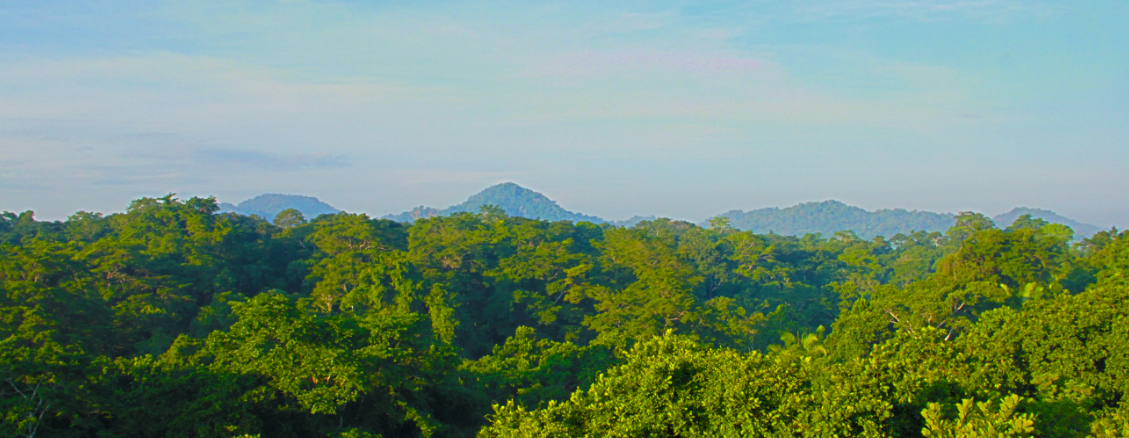
Down at 330, Up at 5:30 for canopy tower visit. Saw blue cotinga.


All girls were super tired. They left to go sleep. I stayed in jungle for work. More army ants.
Found em, experimented with them. They were raiding leaf cutters. Pipeline road serves as a decent permanent transect. Elucidates animals corssing through the forrest.

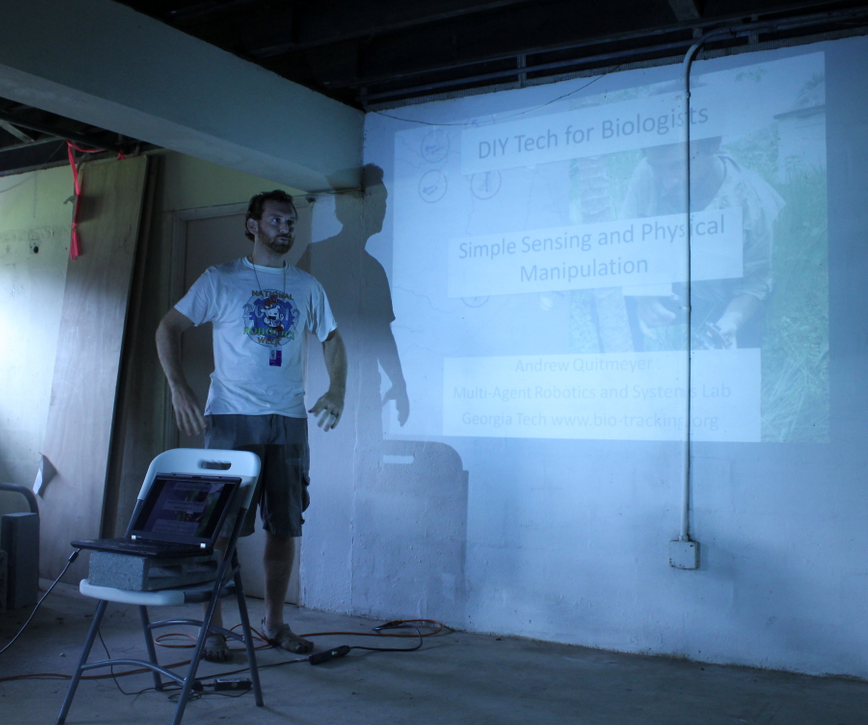
Made it back (walking) around 1:30. Ate changed, prepped for my talk. Lots of mad rushing around. All the parts and projectors and arduinos i needed were somewhere else. The talk was a huge success though! Biologists seem easily impressed by decent presenting and have an impressive enthusiasm for attending these sorts of things. I’ve never really seen anything like it before.


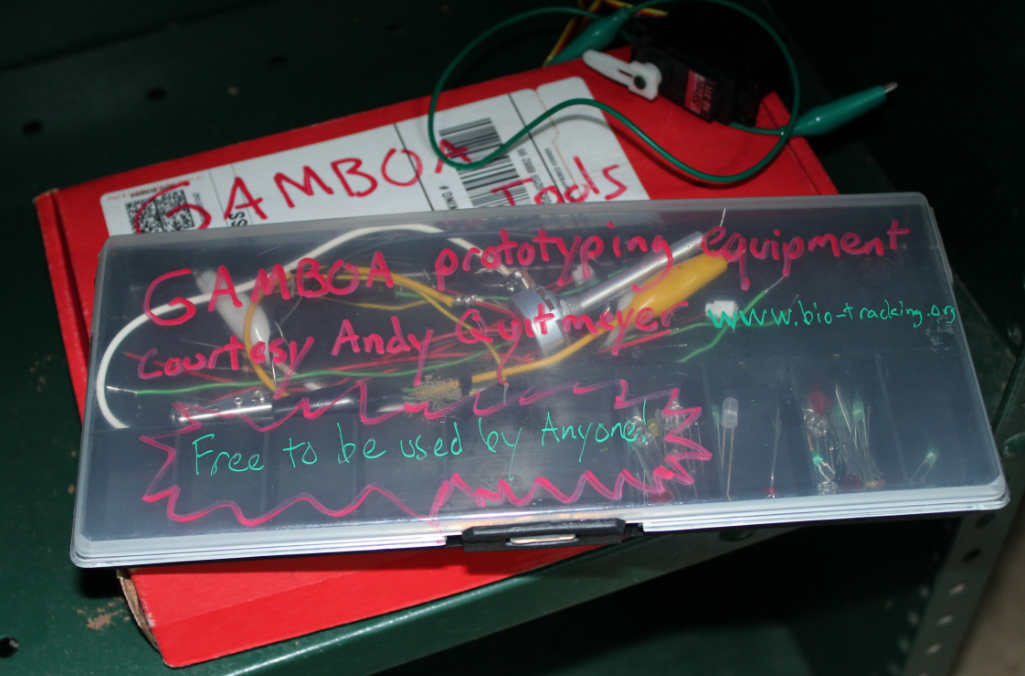
Finished chatting at 6:45. Packed up, went with Peter to eat at 150B. Asleep at 10:45. Decided to donate my arduinos and prototyping equipment for the residents of gamboa. Hopefully they will play around with these things!